
⏱️ Read Time: 8 min
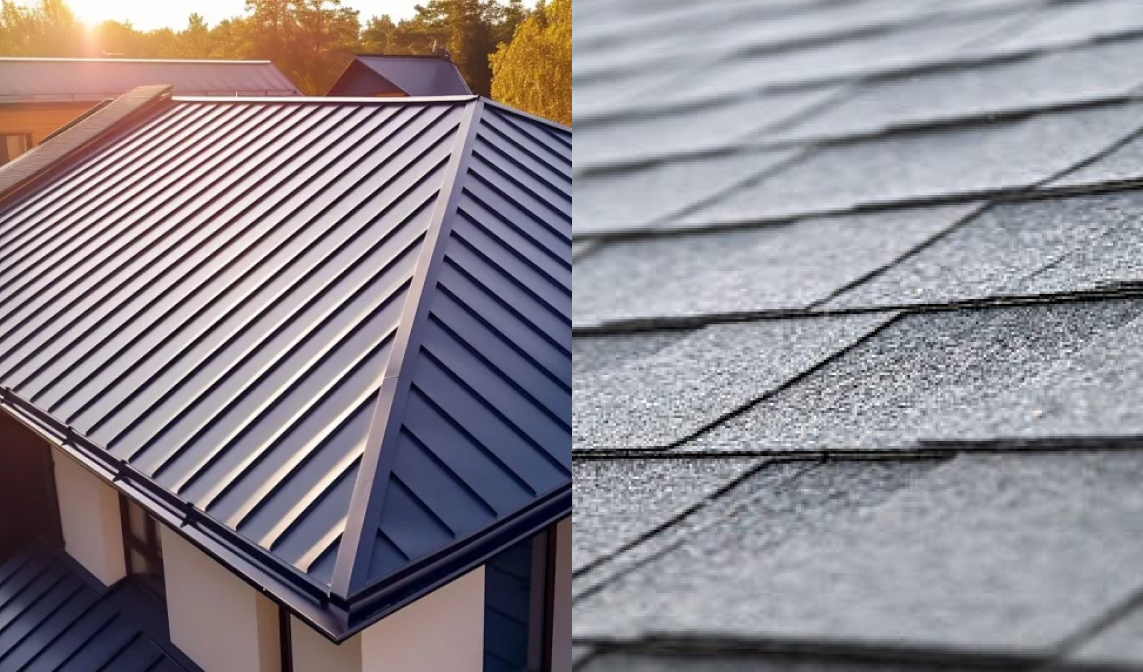
If a hailstorm just tore through your neighborhood — or you're tired of filing the same insurance claim every few years — you're probably asking yourself a serious question: should I replace my roof with the same asphalt shingles, or finally make the switch to metal?
This isn't just a cost question. It's a climate question, a lifespan question, and a storm-resilience question. And the answer is different depending on where you live and what your roof goes through every year.
At SkyShield Roofing USA, we've replaced thousands of roofs across Houston, Dallas, Atlanta, Kansas City, Nashville, Oklahoma City, Chicago, and Phoenix — so we've seen both materials perform under real storm pressure. Here's what you actually need to know before making a $10,000–$30,000 decision.
| Feature | Asphalt Shingles | Metal Roofing |
|---|---|---|
| Upfront Cost | $5,800 – $12,200 (Avg) | $18,000 – $35,000+ (Avg) |
| Lifespan | 15 – 30 Years | 40 – 80 Years |
| Wind Resistance | 110 – 130 MPH | 140+ MPH |
| Energy Efficiency | Low to Moderate | High (10-25% Savings) |
| Maintenance | Regular (Every 2-4 Years) | Low (Annual Check) |
What Are Asphalt Shingles?
Asphalt shingles are the most common roofing material in North America, found on roughly 75–80% of U.S. homes. They're made from a fiberglass or organic mat base, coated with asphalt for waterproofing, and topped with ceramic granules that protect against UV rays and add color.
There are two main types:
- Three-tab shingles — the older, thinner, flat-profile option. These are the least expensive but offer the least durability and wind resistance. Most roofers no longer recommend them in storm-prone regions.
- Architectural (dimensional) shingles — a thicker, multi-layer design that creates a textured, slate-like appearance. These are the industry standard today and perform significantly better against wind and impact than three-tab shingles.
What Is Metal Roofing?
Metal roofing covers a broad category of products including steel, aluminum, copper, and zinc panels. The most common residential styles are:
- Standing seam metal roofing — long vertical panels with raised interlocking seams. The seams run from ridge to eave, and fasteners are hidden, which eliminates one of the most common leak points. This is the most storm-resilient metal roof style.
- Metal shingles — designed to mimic the look of asphalt shingles, slate, or wood shakes while delivering the lifespan and weather resistance of metal. A popular choice for homeowners who want durability without sacrificing curb appeal.
- Corrugated metal panels — most common in agricultural and industrial applications, though they appear in some residential projects. Less aesthetically versatile than the options above.
Asphalt Shingles vs. Metal Roof: Head-to-Head Comparison
Cost
This is where asphalt shingles win — at least upfront.
Asphalt shingle roofs cost between $5,800 and $12,200 on average to replace, while metal roofing can cost double that amount, with prices ranging from $4 to $30 per square foot depending on the style and material. To put real numbers on it: a 2,000-square-foot home with architectural shingles typically runs $10,000–$16,000 installed. The same home with a standing seam steel roof runs $18,000–$35,000 or more.
But the upfront cost comparison is misleading. A metal roof can last 40 to 80 years, which means that over its lifespan, you might need to replace an asphalt roof two or even three times. When you calculate total cost of ownership over 50 years, metal often costs less per year of service.
Bottom line on cost: If you plan to sell within 10 years or have a tight budget, asphalt shingles are the practical choice. If you're staying long-term, metal makes strong financial sense.
Lifespan
A metal roof lasts 50 years to 70 years, while asphalt shingles last around 30 years. And that 30-year figure assumes ideal conditions — in hot, humid climates like Houston or Atlanta, or high-UV environments like Phoenix, asphalt shingles often degrade faster. Real-world lifespans of 15–22 years are common in those markets.
Temperature cycling is a major culprit. In hot weather, asphalt shingles expand, and in cold weather, they contract. Over time, this constant movement causes cracking and curling, which weakens the roof's ability to protect your home. Metal handles thermal expansion through engineered panel design — it's built to move without failing.
Storm Performance and Hail Damage
This is the most important comparison for homeowners in Kansas City, Dallas, Oklahoma City, Nashville, and other storm-corridor markets where hail and high-wind events are frequent.
Wind resistance:
Metal typically withstands higher wind speeds (140+ mph vs 110-130 mph for asphalt). That difference matters in hurricane-risk zones like Houston and coastal areas where wind-driven rain is the primary source of storm damage.
Hail impact:
Metal roofs also don't suffer from issues warping, cracking, or algae growth, which are common with asphalt shingles. They shed snow and rain more easily, too, lowering the risk for water damage. However, not all metals are equal when it comes to hail. Aluminum and copper can dent more easily from large hailstones. Steel — especially Galvalume or stone-coated steel — is more resistant but carries a higher price tag.
Asphalt shingles lose granules with each hail impact. Those granules are the primary UV protection layer. Once granule loss is significant, the shingles begin degrading rapidly. A single bad hailstorm can visually shorten your roof's lifespan by 5–10 years even if the insurance adjuster only approves a partial repair.
Moisture and leaks:
Unlike asphalt, metal does not absorb moisture, preventing issues like rot, mold, and water damage. In humid markets like Atlanta, Nashville, and Houston, this is a critical long-term advantage. Asphalt shingles in these climates are prone to algae growth, moss, and mold, particularly on north-facing slopes that don't get direct sunlight.
Energy Efficiency
Metal vs asphalt roof comparisons show metal can reduce cooling energy by 10–25% in warm regions. The reflective surface of light-colored metal roofing — especially standing seam with cool-roof coatings — bounces solar radiation away from the home rather than absorbing it.
This matters enormously in Phoenix and Houston, where summer attic temperatures can reach 150°F+ under dark asphalt shingles. Energy savings of $200–$500 per year are realistic in hot climates.
Asphalt shingles do have energy-efficient "cool roof" options with enhanced reflective granules, but they don't match the performance of bare metal.
Maintenance Requirements
Metal roofs win here. You won't have to worry about replacing shingles — you'll eliminate the need for frequent repairs over their lifespan. Once installed correctly, a quality steel or Galvalume metal roof needs little beyond an annual inspection and occasional fastener checks.
Asphalt shingles require regular attention. Granule loss, cracked or lifted shingles, failing flashing, and algae growth all require periodic repair. In storm-heavy markets, homeowners with asphalt roofs often see their contractor every 2–4 years.
Installation and Repair
Asphalt wins decisively here. Asphalt shingles are much easier and quicker to install than metal. They can be installed in one to two days, in some cases over an existing layer.
Metal roofing requires specialized tools and training. Not every roofing contractor is qualified to install standing seam correctly — poor installation leads to oil-canning (visible waviness in the panels), fastener failures, and compromised weatherproofing.
On the repair side, replacing a damaged section of metal roof is more complex and expensive than swapping out a few asphalt shingles. However, metal rarely needs repairs in the first place.
Environmental Impact
Approximately 11 million tons of asphalt shingles are sent to landfills each year and cannot be recycled, while most metal roofing materials are made from recycled content and can be recycled again after removal.
If sustainability is part of your decision, metal is the clear winner — it's often made from 25–95% recycled content and is fully recyclable at end of life.
Where Each Material Performs Best
Asphalt shingles are the right choice when:
- ✓ Budget is the primary driver and you need a quality roof at the lowest possible cost
- ✓ You're planning to sell the home within 5–10 years
- ✓ You're in a mild climate with infrequent severe weather
- ✓ You need a quick installation during an urgent post-storm replacement
- ✓ Your HOA or neighborhood aesthetic requires traditional shingle appearance
Metal roofing is the right choice when:
- ✓ You're staying in the home long-term (15+ years)
- ✓ You're in a high-storm-risk market — Dallas, OKC, KC, Houston, Nashville
- ✓ Your current asphalt roof has been replaced more than once due to storm damage
- ✓ Energy efficiency and lower cooling bills are a priority (especially PHX, Houston)
- ✓ You want to qualify for lower insurance premiums (up to 30% discount)
- ✓ You care about sustainability and reducing landfill contribution
What About Insurance?
This is increasingly important in storm-corridor markets. After repeated hail events, insurers in Texas, Oklahoma, and Kansas have begun non-renewing policies on homes with aging asphalt roofs. Some carriers now require Class 4 impact-rated roofing materials for new policies.
Metal roofing — particularly Class 4 rated products — typically qualifies for premium discounts of 20–30% in many markets. Over a 30-year period, those insurance savings can offset a significant portion of the higher installation cost.
Always verify impact resistance ratings (Class 1–4) before purchasing either material. Class 4 is the highest and most storm-resistant designation for both asphalt and metal products.
Frequently Asked Questions
Does a metal roof increase home resale value?
A metal roof can increase your home's resale value by up to 6% compared to asphalt shingles. Homeowners recoup an average of 85.9% of the cost of a metal roof. Resale value benefit is highest in storm-prone markets where buyers are aware of roofing costs.
Is metal roofing louder during rain or hail?
When properly installed with adequate insulation and underlayment, metal roofing is no louder than asphalt. Noise is primarily a concern in open-structure agricultural buildings. Residential metal roofs with solid decking and insulation perform similarly to shingles acoustically.
Can metal roofing be installed over existing shingles?
Yes, in most cases — provided the existing shingles are in decent structural condition and local building codes permit it. By avoiding a tear-off, you not only save on labor and disposal costs, you also prevent tons of asphalt material from ending up in landfills.
How long does a metal roof installation take?
Most residential metal roof installations take 3–7 days depending on home size, roof complexity, and the specific product. This is longer than asphalt (1–2 days) but still manageable.
Does hail dent metal roofs?
It depends on the metal type and gauge. Steel roofs (Galvalume or stone-coated) are the most hail-resistant. Aluminum and copper are softer and more prone to visible denting from large hailstones. In high-hail markets like Kansas City, Dallas, and Oklahoma City, we recommend steel-based metal products over aluminum.
The SkyShield Recommendation
In our markets — where storms are frequent and humidity accelerates asphalt degradation — we recommend metal roofing for any homeowner planning to stay in their home more than 10 years.
Get a Free Roof Assessment