
⏱️ Read Time: 7 min
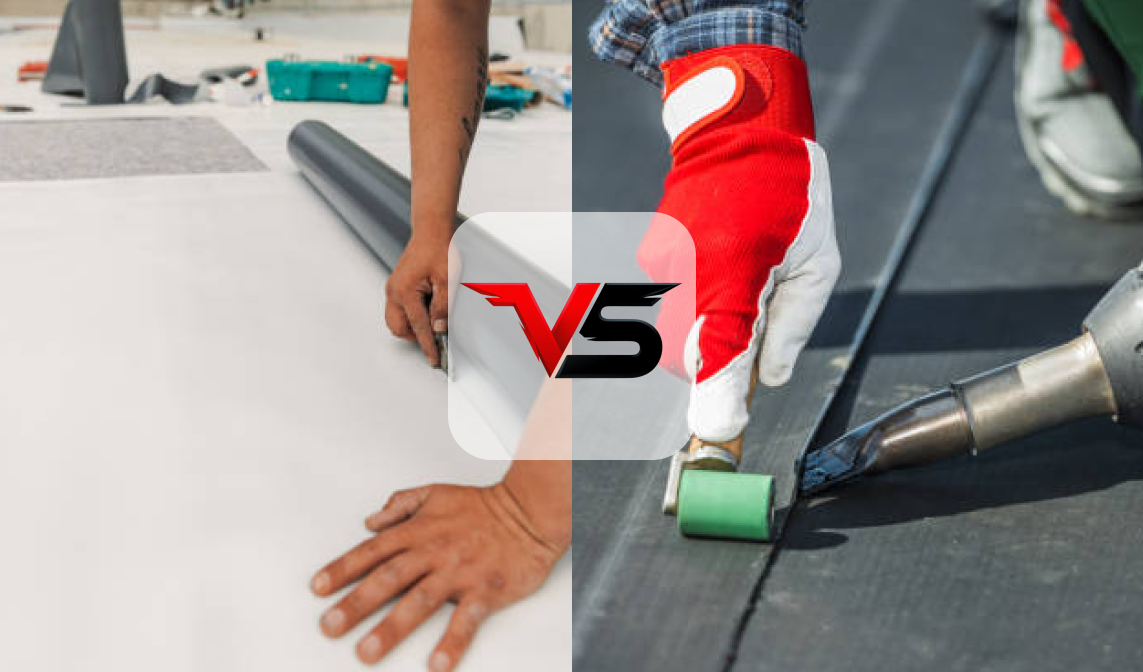
Flat and low-slope roofs are a different animal. The materials that protect steep residential roofs — asphalt shingles, metal panels — aren't designed for surfaces where water pools, UV exposure is constant, and HVAC equipment lives. Flat roofs need membranes: flexible, waterproof systems that handle standing water, thermal expansion, and foot traffic from maintenance crews.
Three systems dominate today's flat roofing market: TPO, EPDM, and Modified Bitumen. Each has its strengths, its weaknesses, and its ideal use case. If you're a property owner in Houston, Dallas, Chicago, Atlanta, or Kansas City staring down a flat roof replacement, this guide gives you everything you need to make the right call.
Understanding Flat Roof Systems: The Basics
Unlike sloped roofs that shed water through gravity, flat and low-slope roofs (generally 0–2:12 pitch) must hold standing water for extended periods after rainfall before it drains. This creates fundamentally different demands on roofing materials: seam integrity is critical, puncture resistance matters, and long-term UV stability is non-negotiable.
The three primary flat roof membranes work on similar principles but differ significantly in materials, installation method, performance, and lifespan.
What Is TPO?
Thermoplastic Polyolefin (TPO) is a single-ply membrane made from a blend of polypropylene and ethylene-propylene rubber. It's become the most popular commercial flat roofing choice over the past decade, largely because of its combination of energy efficiency, seam strength, and competitive cost.
TPO sheets are heat-welded at the seams using hot-air guns — a process that creates a bond that's actually stronger than the membrane itself when done correctly. The white or light-colored surface reflects UV radiation, which directly reduces cooling costs in the building below.
TPO Pros
- ✓ Superior energy efficiency. TPO's white surface reflects sunlight, which translates into lower air conditioning costs in hot markets like Houston and Dallas.
- ✓ Heat-welded seams. Creates a continuous waterproof surface that is stronger than the membrane itself, virtually eliminating seam failure.
- ✓ Chemical and puncture resistance. Holds up well against chemicals and oils, making it ideal for buildings with kitchen exhaust systems.
- ✓ Environmentally friendly. Fully recyclable and contains no chlorine-based compounds.
TPO Cons
- ✕ Requires skilled installation. Heat welding demands specialized equipment and highly trained technicians.
- ✕ Higher upfront cost than EPDM. Typically runs between $5 and $7 per square foot.
- ✕ Shorter track record. Relatively newer technology compared to EPDM; long-term data beyond 25 years is limited.
Best for: Most commercial buildings in hot and mixed climates. Any building where energy efficiency and seam integrity are top priorities.
What Is EPDM?
Ethylene Propylene Diene Monomer (EPDM) is the heavy-duty black rubber membrane you've seen on commercial buildings for decades. It's been the industry workhorse since the 1960s and remains one of the most reliable options available — especially in cold climates like Chicago.
EPDM Pros
- ✓ Proven long-term durability. Decades of performance data; handles extreme hot-to-cold swings without cracking.
- ✓ Lowest upfront cost. Typically the most budget-friendly option for large flat roofs.
- ✓ Cold weather performance. Excels in northern climates (Chicago/Kansas City) handling freeze-thaw cycles better than TPO.
- ✓ Easy repair. Punctures can be patched quickly with compatible rubber tape or liquid flashing.
EPDM Cons
- ✕ Heat absorption. Standard black surface absorbs heat, significantly increasing cooling costs in southern markets.
- ✕ Adhesive seams. Relies on tape or glue, which can lift or separate over time compared to TPO's welded seams.
- ✕ Chemical sensitivity. Degrades when exposed to petroleum-based products or kitchen grease.
Best for: Budget-conscious projects in northern climates where cold-weather performance is critical and energy savings are less of a factor.
What Is Modified Bitumen?
Modified Bitumen (Mod Bit) is the evolution of traditional asphalt roofing, reinforced with polymers like SBS rubber or APP plastic. It is a multi-ply system, providing built-in failsafe protection through redundant layers.
Modified Bitumen Pros
- ✓ Superior storm resistance. Multi-layer construction handles hail and high winds better than single-ply membranes.
- ✓ Hurricane uplift resistance. Excellent performance in coastal markets like Houston where wind uplift is a major concern.
- ✓ Foot traffic friendly. Granule-surfaced cap sheets provide excellent durability for roofs with frequent maintenance crews.
Modified Bitumen Cons
- ✕ Shorter lifespan. Typically lasts 15–25 years, shorter than premium TPO or EPDM installations.
- ✕ Higher weight. Layered construction is heavier and may require structural assessment.
- ✕ Installation fire risk. Torch-down application creates hazards; requires highly certified applicators.
Best for: Severe storm corridors and hurricane-prone areas. Buildings with high roof traffic or those needing redundant protection.
Side-by-Side Comparison
| Factor | TPO | EPDM | Mod Bit |
|---|---|---|---|
| Lifespan | 20–30 years | 25–30 years | 15–25 years |
| Cost (installed) | $5–$7/sq ft | $4–$6/sq ft | $4–$8/sq ft |
| Energy Efficiency | Excellent (white) | Poor (black) | Fair |
| Storm Resistance | Good | Good | Excellent |
| Foot Traffic | Good | Fair | Excellent |
| Seam Strength | Excellent (Welded) | Fair (Adhesive) | Good |
Which Flat Roof System Is Right for Your Climate?
- Hot and humid climates (Houston, Atlanta, Dallas): TPO is the primary recommandation for its cooling cost savings.
- Storm-heavy markets (KC, Dallas, OKC, Nashville): Modified Bitumen earns serious consideration for its multi-layer impact protection.
- Cold climates (Chicago/Northern markets): EPDM's freeze-thaw performance and winter heat absorption make it the time-tested choice.
- Coastal hurricane-risk areas (Houston Gulf Coast): Modified Bitumen's wind uplift resistance is indispensable.
Frequently Asked Questions
How long do flat roofs last on average?
With proper installation and regular maintenance, TPO and EPDM last 20–30 years, while Modified Bitumen typically runs 15–25 years. Lifespan is heavily influenced by climate — extreme UV, heat cycling, and storm frequency all accelerate membrane degradation.
Can I install flat roofing over an existing system?
Sometimes — but it depends on the existing roof condition, the number of existing layers, and local building codes. Most jurisdictions limit flat roofs to two layers before requiring a full tear-off.
What maintenance does a flat roof need?
All three systems benefit from bi-annual inspections, post-storm assessments, debris removal, and prompt patching of any punctures or seam separations. Standing water remaining longer than 48 hours is a warning sign of drainage problems.
Is TPO or EPDM better for a commercial building in Texas?
In Texas markets like Houston and Dallas, TPO is generally the better choice because it significantly reduces air conditioning bills by reflecting the intense summer sun.
The SkyShield Assessment
The most important factor after material selection is contractor expertise. A premium membrane installed poorly will fail faster than a budget one installed correctly.
Request a Free Flat Roof Assessment